Lebanese Ministry of Information
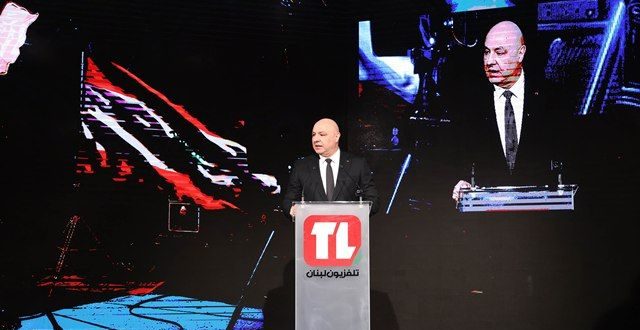
President of the Republic, General Joseph Aoun, on Wednesday affirmed that Télé Liban “is an inseparable part of our national identity,” stressing that its renewed strength today “is a message of hope to all Lebanese that we are capable of recovery.” The President was speaking at the ceremony marking the launch of the nomination of Télé Liban’s archive to UNESCO’s Memory of the World Register, which was held at the television’s headquarters in Hazmieh.
Aoun said the nomination “returns Lebanon to its natural place on the global stage in the media and documentation fields” and confirms that the country’s cultural and media heritage “deserves international recognition and preservation.”
Moreover, the President emphasized that Lebanon is at the outset of a new phase, one in which confidence in national institutions is being restored and the state rebuilt on firm foundations of transparency and efficiency, adding: “We see a new Lebanon being born before our eyes, through the revival of its institutions and the recovery of their leading role.”
The ceremony was attended by Information Minister Paul Morcos, National Audio-Visual Media Council head Abdel Hadi Mahfouz, Télé Liban Board Chair Dr. Elissar Naddaf, Director General of the Ministry of Information Dr. Hassan Falha, Editors’ Syndicate head Joseph Qassifi, General Confederation of Lebanese Workers head Bechara Al-Asmar, Télé Liban staff and former employees, as well as ambassadors, diplomats, officials, journalists, and guests.
The event opened with the national anthem, followed by a short video highlighting key milestones and political, cultural, and artistic programs since Télé Liban’s launch.
In her address, Dr. Naddaf described Télé Liban as a living museum of Lebanon’s memory and pledged, on behalf of the new board, to restore the institution to the highest standards through restructuring, technical upgrades, new programming, and the revival of drama production. She announced expanded sports coverage and revealed ongoing contacts to broadcast the upcoming FIFA World Cup free of charge to Lebanese viewers, pending support from relevant ministries. Naddaf also said the board is preparing salary adjustments in line with the minimum wage, underscoring staff as the institution’s backbone.
Furthermore, Naddaf outlined partnerships concluded with international and local entities, including the International Organisation of La Francophonie, UN Women, the British Embassy, Maharat Foundation, UNICEF, and support from the Turkish and Chinese embassies for equipment and studios. Forthcoming agreements with the private sector, the Lebanese diaspora, UN agencies, ESA Business School, and France Médias Monde aim to upgrade Télé Liban from SD to Full HD, strengthen youth programming, governance, and visual identity.
Naddaf also announced that Télé Liban’s archive, documenting Lebanon’s political and cultural life since 1958, has been digitized with support from UNESCO’s Beirut office and the Aleph Foundation, and that the nomination file was submitted to UNESCO Paris last week. “The nation’s memory will become part of the world’s memory,” she said.
In turn, Information Minister Morcos welcomed the nomination, noting sustained efforts to protect and digitize the archive and the appointment of Télé Liban’s first board since 1999. He praised the channel’s return as a unifying national platform grounded in professionalism, objectivity, and media ethics, rejecting sensationalism and misinformation.
In his closing address, President Aoun described Télé Liban as “the faithful voice of the nation” and a guardian of collective memory. He hailed the reopening of the Hazmieh building alongside continued operations at the historic Talet El-Khayyat site as a symbol of balancing heritage with modernization.
Aoun then welcomed the UNESCO nomination as recognition of a “true national treasure,” thanked Télé Liban’s staff past and present, the board, the Ministry of Information, and UNESCO Beirut, and called on all stakeholders to work as one team to present “the true image of Lebanon, strong institutions, free and responsible media, and a future worthy of its history.”
The ceremony also featured two short films on the preservation and preparation of the archive for UNESCO’s register.
Earlier, President Aoun toured Télé Liban’s offices and archive department with Minister Morcos and Dr. Naddaf to review preservation methods and technologies.