Lebanese Ministry of Information
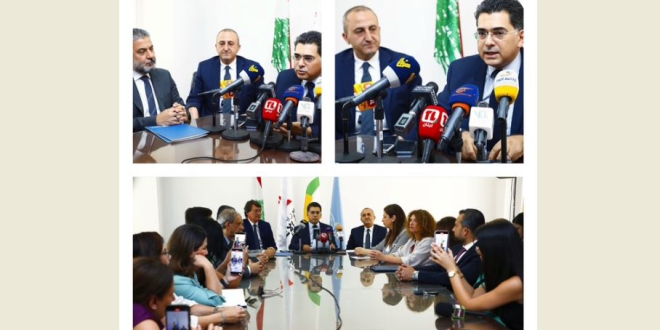
In a united effort to combat disinformation and hate speech in Lebanon, the Ministry of Information, the United Nations Educational, Scientific and Cultural Organization (UNESCO), and the Organisation Internationale de la Francophonie (OIF) officially launched today the national media and information literacy campaign titled “No Filter: Believe Everything? Think Again.” This initiative marks the second component of the broader Strategic Tripartite Partnership announced earlier this year, which aims to promote media literacy and bolster public resilience to misinformation.
The campaign will be deployed nationwide through television and digital platforms, featuring a central awareness video as well as a series of dynamic capsule videos. These short clips highlight the personal reflections of prominent Lebanese figures on their experiences with media and information literacy. Among those featured are Amir Saoud, captain of the Lebanese National Basketball Team and Al Riyadi Club; Yassmina Zeytoun, Miss Lebanon 2022; Rayan Hayek, a young journalist; and Raneem Bou Khzam, news anchor and TV host at LBCI. Their testimonies, along with on-the-street interviews capturing the voice of ordinary citizens, illustrate the real-world consequences of misinformation and emphasize the need for critical thinking in today’s digital age.
The campaign is also backed by a robust capacity-building component aimed at empowering the media sector. Journalists and correspondents from the National News Agency will receive specialized training in fact-checking and video reporting, supported by new technical equipment. This effort is designed to help media professionals meet the highest standards of accuracy, transparency, and public accountability.
“No Filter: Believe Everything? Think Again” is not just a campaign—it is a call to action for every Lebanese citizen to pause, question, and think critically before accepting and sharing information,” said H.E. Dr. Paul Morcos, Minister of Information in Lebanon.
“This initiative represents a concrete step toward safeguarding truth in a time of digital overflow. By investing in education, media capacity, and public awareness, we are contributing to a more informed and resilient Lebanese society,” said Paolo Fontani, Director of UNESCO Regional Office in Beirut and Representative to Lebanon and the Syrian Arab Republic.
“Fighting disinformation is a global challenge with local solutions. Through this partnership, we are enabling local actors to lead the charge in building trust, verifying facts, and elevating responsible journalism,” said Lévon Amirjanyan, OIF Representative for the Middle East.
By joining forces, UNESCO, OIF, and the Ministry of Information aim to create a safer, more conscious media landscape in Lebanon—one that empowers individuals to challenge what they see, hear, and share.
Full Remarks by Minister of Information Dr. Paul Morcos at the Campaign Launch Press Conference:
“Mr. Levon Amirjanyan, Representative of the International Organization of La Francophonie in Lebanon and the Middle East,
Mr. Paolo Fontani, Director of UNESCO’s Regional Office in Beirut,
Esteemed members of the media, our partners in the fight against disinformation—We are here to confront a silent threat—one that doesn’t knock on doors but slips in through open windows: a tweet, a message, a hastily recorded video. Yet it can spark a fire not easily extinguished. Combating this threat is not merely an information war; it is a battle of awareness, conscience, and human responsibility.
In Lebanon—a country that rises each morning despite fatigue and smiles despite its wounds—disinformation never stops trying. It aims to spread fear, sow doubt, and dismantle trust among people.
We live in an age of unprecedented information flow. But with this rapid flow comes serious challenges. Alongside useful and accurate content, falsehoods, misinformation, and manipulative narratives spread with alarming speed—fueling confusion, division, and sometimes even inciting fear or unrest.
This is where the role of public media becomes essential—as a cornerstone in shaping collective awareness.
At the Ministry of Information, we believe that the fight against disinformation is not won through fact-checking and correction alone. It requires education, the rebuilding of public trust, and the promotion of a culture of verification. That is why we are committed to fostering a responsible media environment—one that upholds accuracy over sensationalism, and places the public interest above the race for headlines.
We are working to strengthen the capacity of public media, making it a trusted and effective platform for truth—capable of countering rumors with scientific and professional tools. We are launching national awareness campaigns to teach citizens how to verify information, encouraging critical thinking and resistance to misleading headlines. We also apply rigorous editorial standards to ensure content is verified before publication.
This is a defense strategy for truth—implemented in partnership with our allies—ensuring accurate information reaches all. It starts with training the journalists and correspondents of the National News Agency and Tele Liban in detecting fake news. It extends to the minister’s own media team, and culminates in the public campaign we are launching today.
Allow me to thank the UNESCO Regional Office in Beirut and the Francophonie’s Lebanon and Middle East Representation for their continued support of public media—whether in the fight against disinformation or other initiatives. I also extend deep appreciation to the journalists of the National News Agency, Tele Liban, Radio Lebanon, and the Studies and Publications Department—those frontline soldiers against disinformation and hate speech. They have proven to be the backbone of credible, responsible journalism in Lebanon.
We call on all media institutions to join us in this national fight against the disinformation that targets all of us—even the Ministry of Information itself has not been spared.
Countering disinformation is not the media’s responsibility alone. It is a shared duty—a national struggle that can only be won through unity: among the media, the state, civil society, and the people.”